
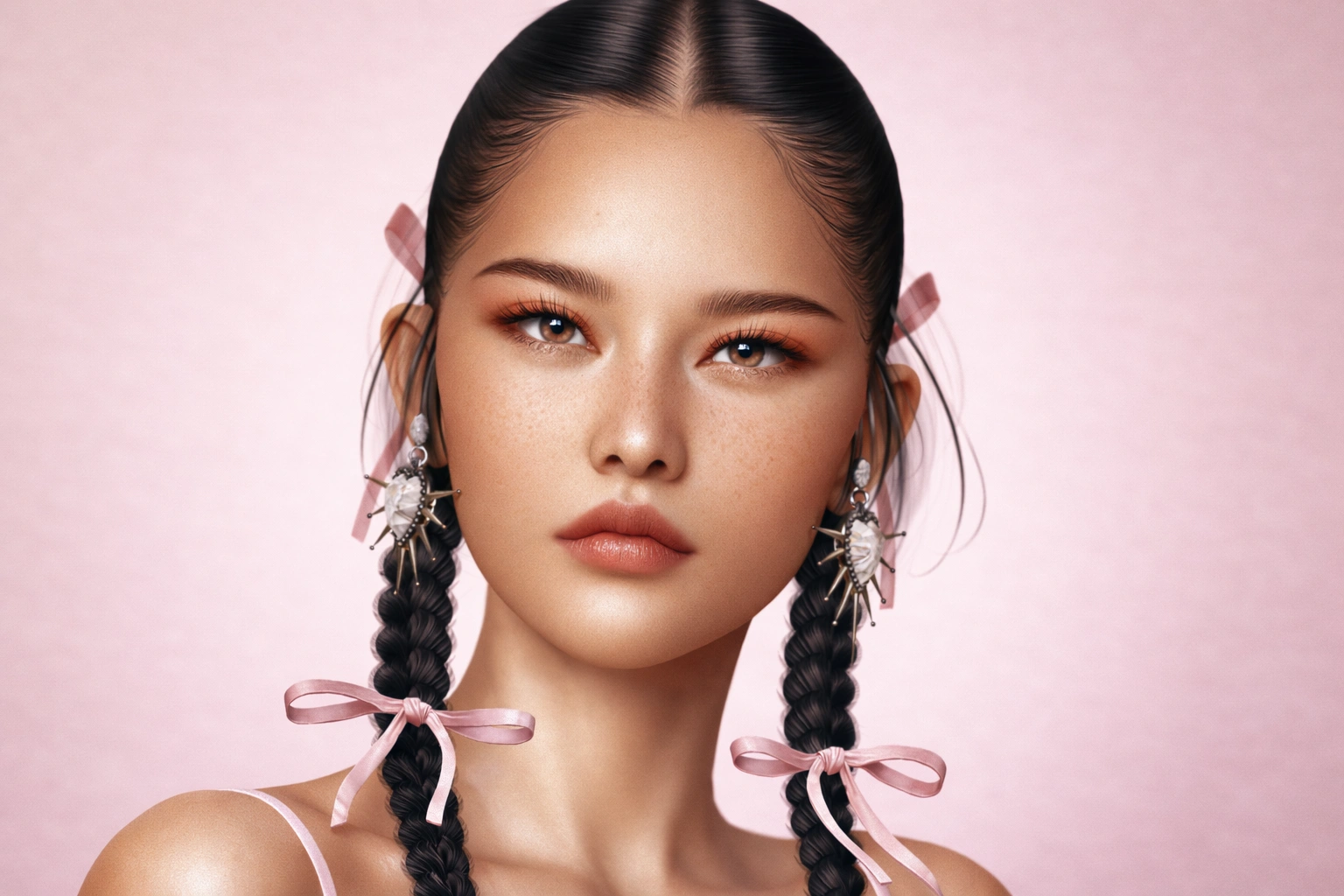

One thing I keep coming back to, especially after trying a ridiculous number of skins over time, is that a good skin and a believable avatar are not always the same thing.
Sometimes you put on a skin that is objectively beautiful. The tones are nice, the lips are well done, the overall finish is polished, and the vendor image probably made it look even better. You wear it, adjust your shape a little, maybe swap brows, change the light, and yet something still feels slightly off. Not bad, exactly. Just a little too smooth, a little too neat, a little too finished.
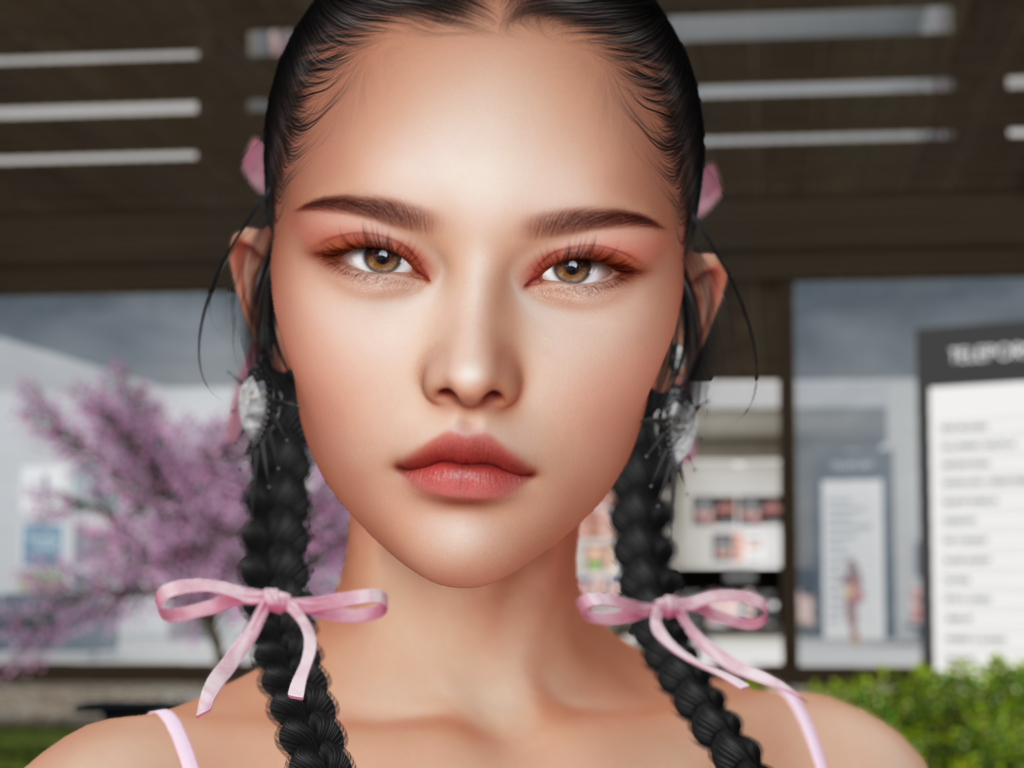
For a long time I assumed that feeling meant I had picked the wrong skin. More often than not, though, that wasn’t really the issue. The problem was that I was expecting the base skin to do everything on its own.
That is usually where Bakes on Mesh details start to matter.
What BOM details actually do
One of the things Bakes on Mesh changed for the better is the way it lets you build a look more gradually. Instead of treating the skin as one final, untouchable thing, it becomes easier to add pieces on top of it and shape the result in a more personal way.
That matters because realism in Second Life usually does not come from one perfect product. It comes from accumulation, but in a controlled sense. Not from piling on everything you own, obviously, but from adding just enough variation to stop the avatar from feeling too polished.
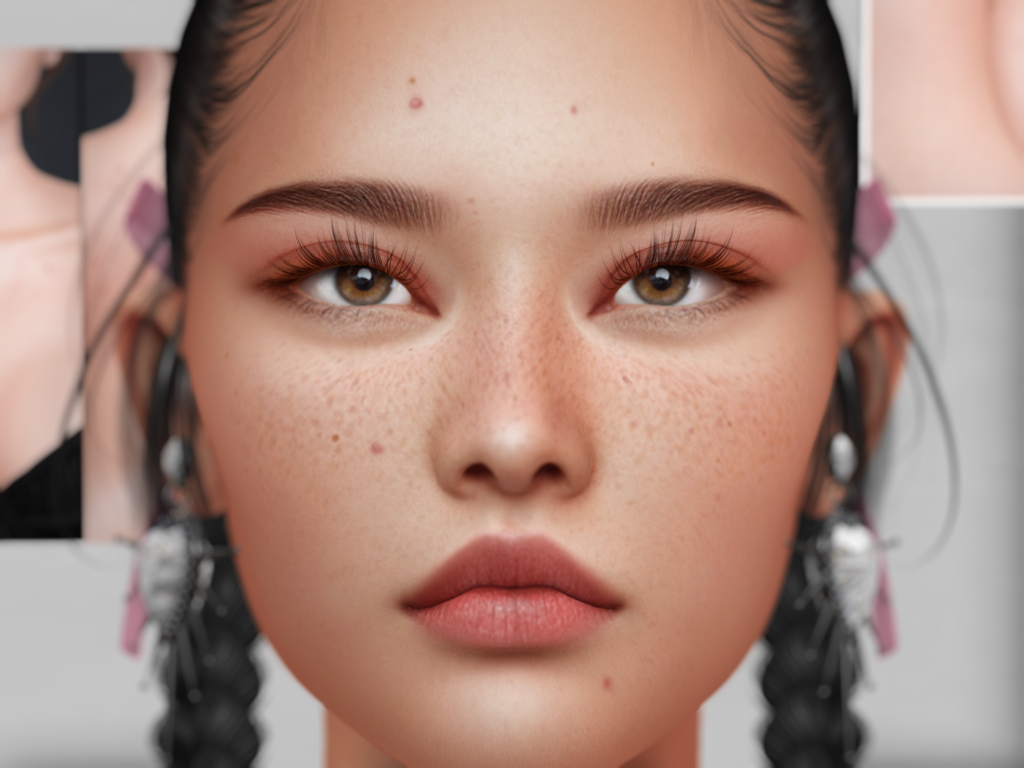
Freckles are part of that. Moles too. Pores, capillaries, faint veins, little imperfections, slight unevenness, the kind of details that are easy to dismiss until you see how much difference they make once they are actually on your own avatar.
Why some beautiful skins still don’t quite feel real
I think this is where a lot of people get disappointed without necessarily understanding why.
A skin can be very pretty and still leave you with the sense that something is missing. Not because it is low quality, but because real skin rarely looks perfectly even and self-contained. There is usually some softness, some irregularity, some texture, some small visual interruption that keeps it from looking too clean.
That is also very close to how people talk about this on the Second Life forums. Whenever the subject of realism comes up, people tend to mention the same things over and over again: freckles, moles, pores, wrinkles, discoloration, under-eye depth, little flaws that make a face feel less manufactured. It is rarely perfection they are after. Usually it is character.
And I think that is the important distinction.
A lot of base skins are already beautiful. What they sometimes lack is not beauty, but specificity.
Freckles and moles
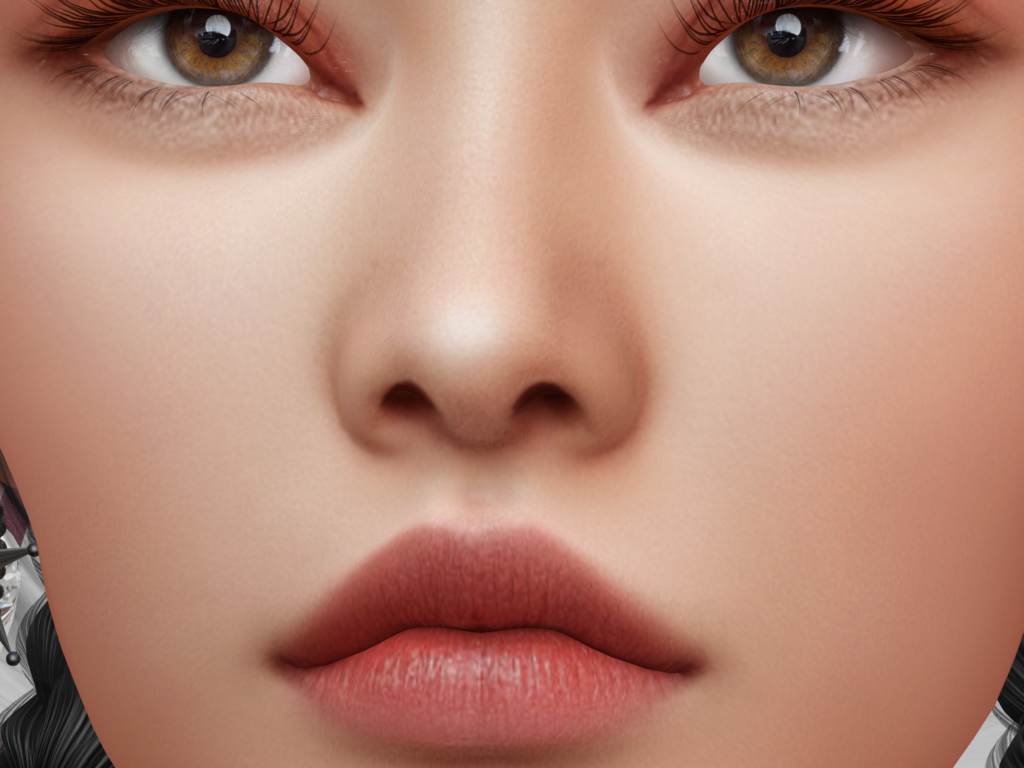
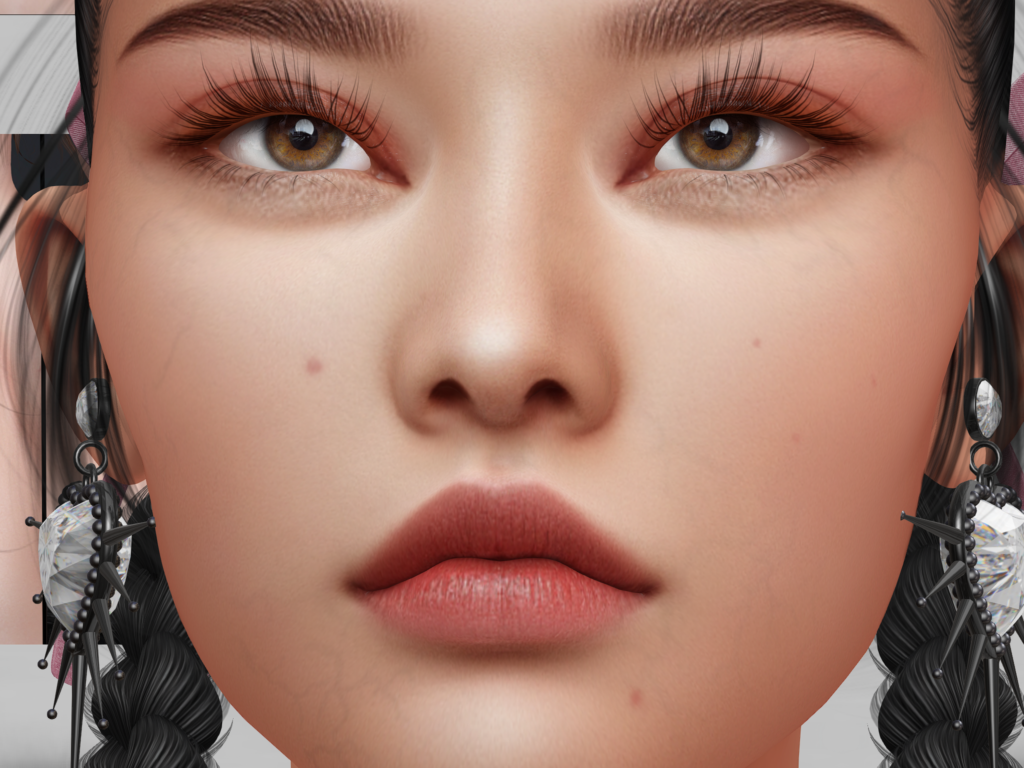
Freckles are probably the easiest place to start, partly because they are so easy to understand visually. Even a very soft freckles layer can change the impression of a face quite a bit. It breaks up that uniform, almost printed quality that some skins can have, and it gives the surface of the skin a little more life.
The same goes for moles. They are such a small detail, but they can add a surprising amount of personality when they are placed well and do not look too decorative. That is probably the key for me with both freckles and moles: I tend to like them more when they look incidental rather than designed.
A lot of the better-looking avatars I have seen use this kind of detail very lightly. Sometimes the freckles are so faint they barely register as freckles in the obvious sense. They just make the skin look a bit less blank. I find that much more convincing than the kind of layer that immediately announces itself.
That is also why I think these are such good entry points for anyone trying to get a more realistic result without overcomplicating things. You can put on one subtle freckles layer and suddenly the whole face looks a little more individual, a little less generic, without changing the avatar in any dramatic way.
Pores, capillaries, and skin texture
This is the category where things can go very right or very wrong.
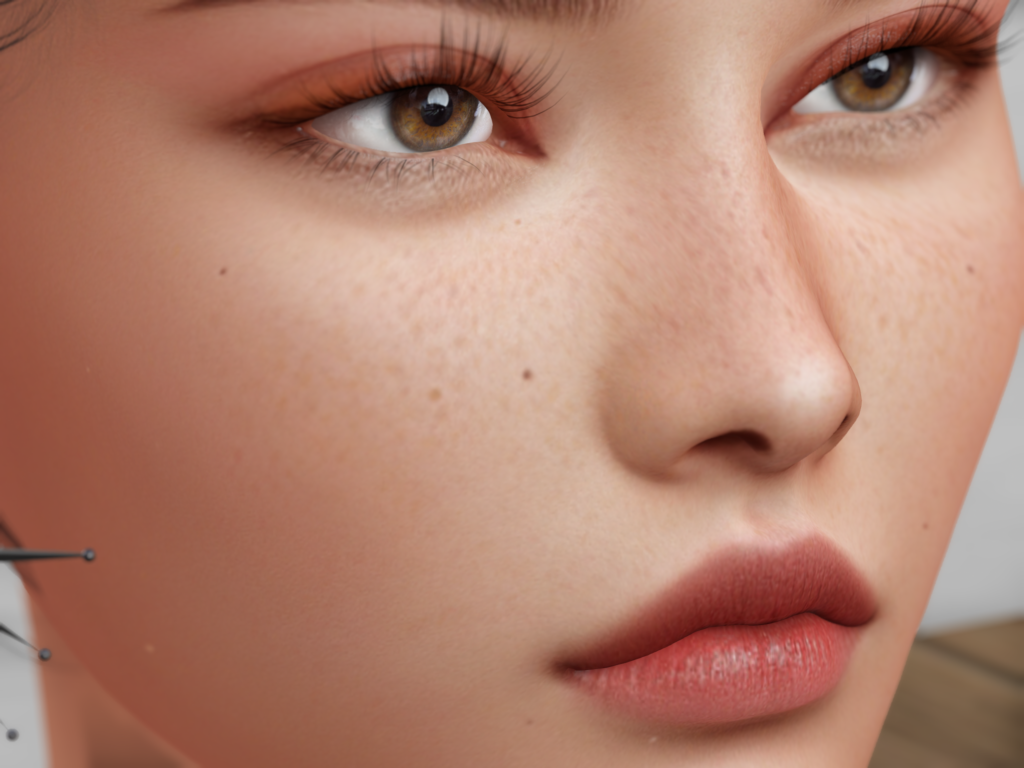
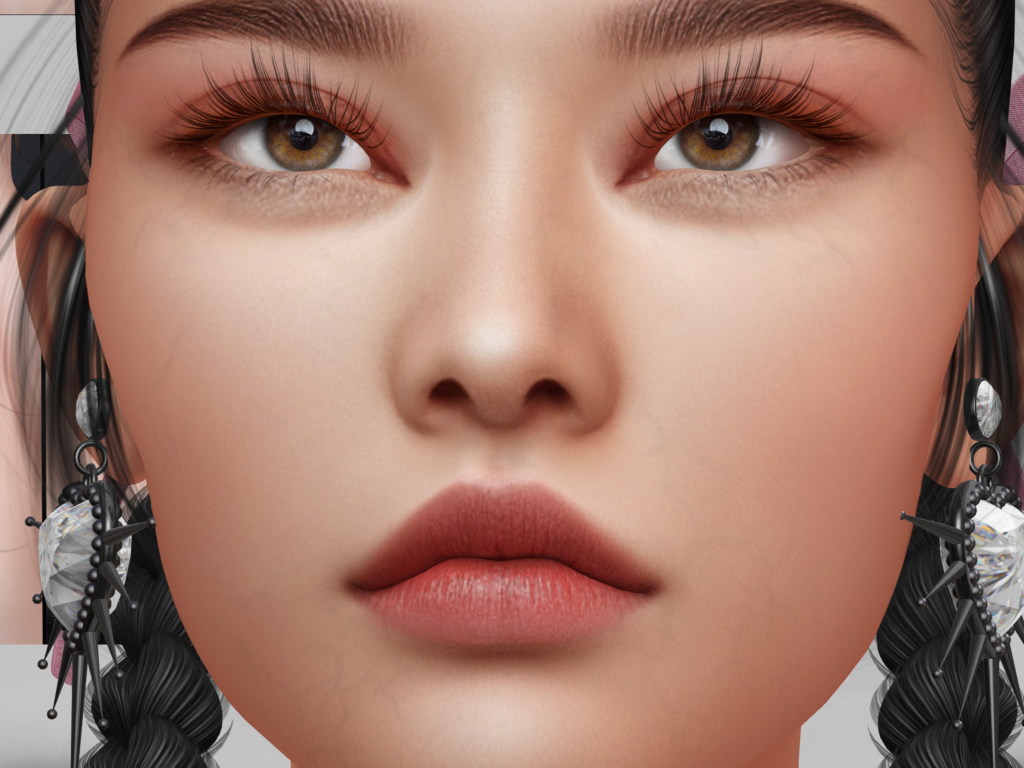
When pore detail works, it can make a skin look much more believable. It adds that slight grain and softness that reminds you there is supposed to be texture there. But it also happens to be one of the easiest things to overdo. I have seen pore layers that made a skin look genuinely interesting, and I have seen others that made the avatar look rough in a very unappealing way.
That complaint comes up on the forum too. People really do notice when pores are too strong or too flat. One resident described bad pore work as looking like sandpaper, which is harsh but not unfair. Once pore detail becomes too obvious, it stops reading as skin and starts reading as effect.
For me, the best pore and capillary layers are the ones you notice more in the overall impression than as a separate element. They do not jump forward. They just stop the face from looking overly smooth. Capillaries can be especially good for that because they add a little visual complexity without necessarily hardening the face.
This is also why adjustability matters so much. The more flexibility a detail gives you, whether in tone, opacity or overall subtlety, the better the chances of making it work with the skin you already have instead of forcing the whole avatar in a new direction.
The value of imperfections
This is probably the part I like most, because it is where realism starts to feel less like a style choice and more like a matter of restraint.
I am not talking about turning every avatar into an extremely weathered, hyper-detailed face. Most avatars do not need that, and in many cases it would not suit them anyway. What I mean is the kind of tiny imperfection that prevents the result from feeling too polished: a little under-eye depth, a touch of unevenness, a hint of blemish here and there, some slight disruption in the surface.
Those details often matter more than people expect. They do not necessarily stand out when you look at the avatar for the first time, but they change the way the whole face sits together.
This is where I think creators like Izzie’s have remained relevant for a reason. When people on the forums talk about wanting a more realistic look, that name comes up again and again, not because everyone is trying to reproduce the exact same face, but because those kinds of add-on layers let people introduce irregularity without replacing their whole skin. That makes a lot of sense to me. It is a more flexible way of working, and honestly a more believable one too.
There is also something else I think matters here: imperfections tend to survive ordinary in-world viewing better than heavily polished skin work does. A detail that still looks good when you are standing in a store, walking around a sim, or seeing your avatar in normal lighting is usually more valuable than something that only looks impressive under ideal vendor conditions.
Veins and structural details
Veins are one of those things I genuinely like, but only in small doses.
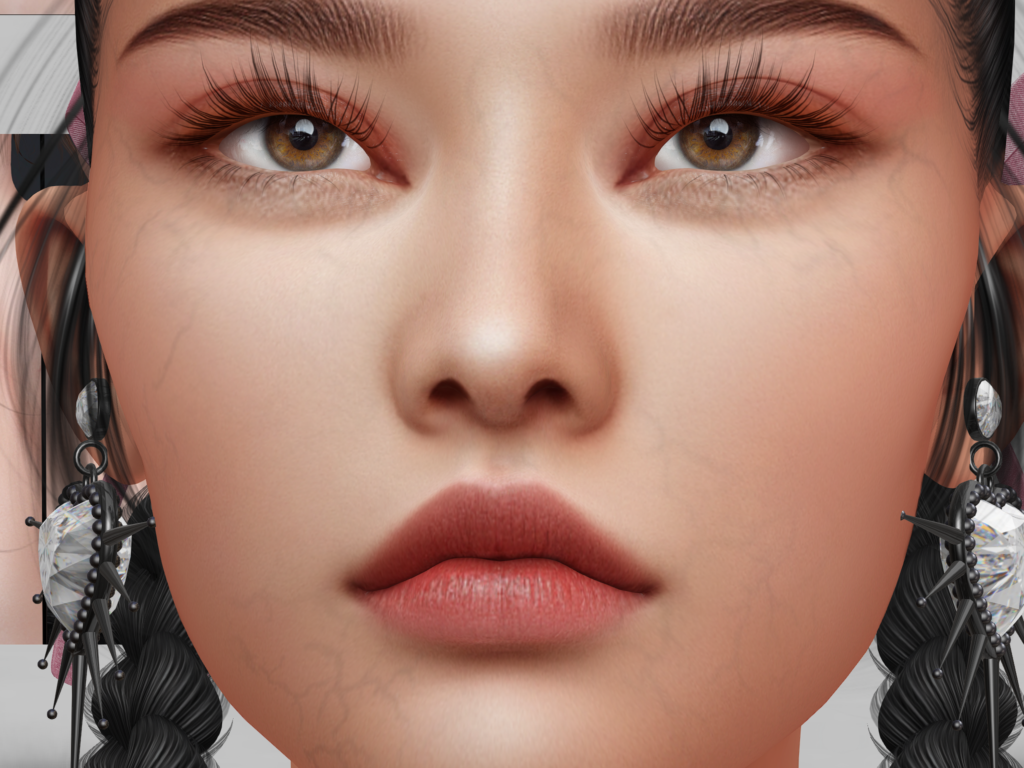
When they work, they can add maturity and depth in a way that feels quite sophisticated. When they do not, they can overwhelm everything else very quickly. The same goes for structural details more generally, whether that is neck shading, soft folds, faint signs of age, or anything else that gives the skin a little more complexity.
I think people sometimes make the mistake of treating realism as a matter of quantity. More pores, more veins, more lines, more texture, more everything. But usually the better result comes from a much lighter hand than that.
A small amount of vein detail can be very effective. Too much of it starts to feel self-conscious. The same is true of age details. A little can make a face more interesting. Too much can make it look as though the detail itself has become the point.
The part that took me the longest to learn
The biggest shift for me, honestly, was learning when to stop.
I used to think that if one detail looked good, then adding a second or third would necessarily improve the result even more. Sometimes it did, but very often it just made the face feel busy. There is a point where skin stops looking nuanced and starts looking crowded.
Now I tend to work more slowly. I start with the base skin, add one thing, look at it in normal lighting, leave it on for a bit, and only then decide whether it actually needs anything else. Sometimes it does. Sometimes it really does not.
That sounds obvious, but it is surprisingly easy to get carried away, especially when each detail looks interesting on its own. The problem is that avatars are not viewed one layer at a time. They are viewed as a whole.
And usually, the more convincing result is the one that feels coherent rather than elaborate.
Compatibility is not a minor detail
This part is less glamorous, but it makes a difference.
A layer can be beautifully made and still not work for you if it is built for a different setup, the wrong UV, the wrong head, or simply a different kind of skin. The practical side of BOM is still practical. You do have to pay attention to what the detail is meant for, whether it comes in different strengths, whether it has a demo, and whether it still looks right once you strip away the styling used in the ad.
That last point matters more than people sometimes admit. There is a difference between admiring a vendor image and wanting to wear the product every day on your own avatar.
Whenever I am uncertain, I trust the demo much more than the ad. It tells you far more about how the detail blends, whether it sits too heavily on top of the skin, and whether it still makes sense once the initial excitement wears off.
Why I think raw screenshots help
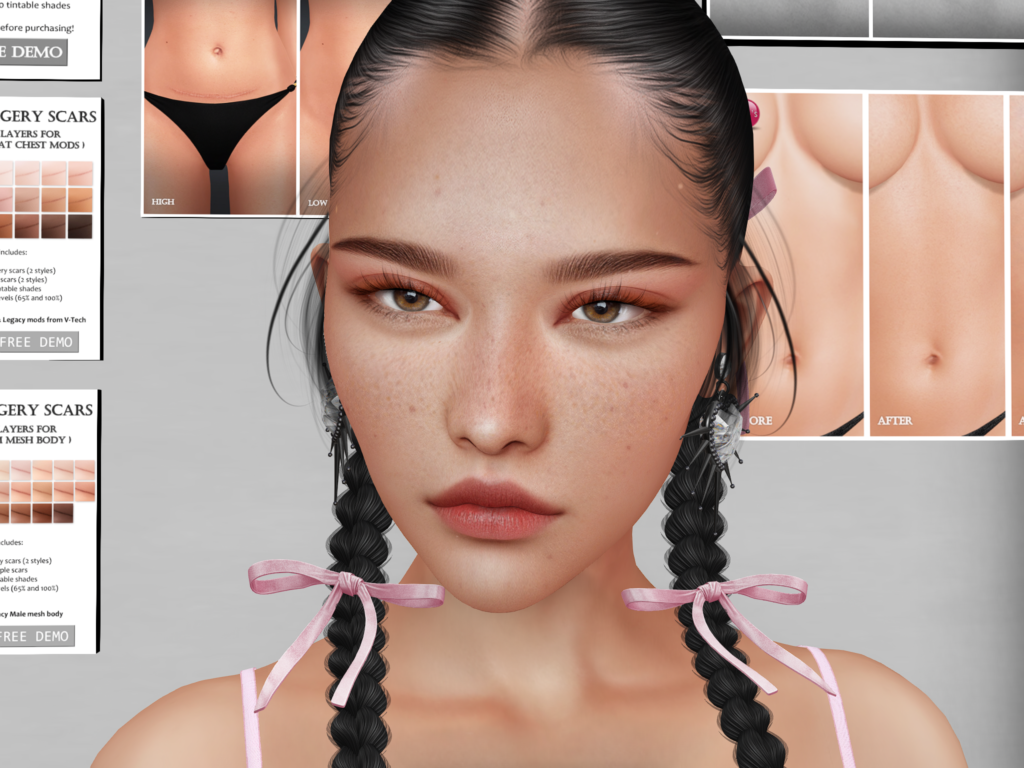
This is also why I like the idea of showing the actual avatar in the article, not just polished close-ups.
I still like vendor images, obviously. They are useful, and they are often beautiful. But if I am trying to decide whether something really works, I want to see the avatar in context. I want to see what the layer looks like in a store, or in neutral lighting, or while the item is actually being worn. I want to see the difference it makes in a way that feels testable rather than staged.
That feeling is all over the forum as well. People are often much more persuaded by a plain, honest screenshot than by an over-processed image, especially when the whole point of the discussion is realism. And that makes perfect sense. If the article is partly about believable skin, then believable screenshots are part of the same logic.
I do not mean messy screenshots for the sake of seeming authentic. I just mean images that show the avatar as it really looks while you are trying things, layering them, comparing them, and deciding whether they are actually worth keeping.
For this topic, that kind of honesty helps.
Where I would start
If I wanted to make an avatar look more realistic without turning the whole thing into a huge project, I would probably start very simply.
A soft freckles or moles layer is often enough to make the face feel less blank. After that, a light pore or capillary detail can add texture without changing the skin too aggressively. Then maybe one very subtle imperfection layer, depending on the look you want. Veins, if at all, would probably be the last thing I would add rather than the first.
That is already enough to change the feel of an avatar more than people expect.
Not because it transforms the face into something completely different, but because it gives the skin a little more life, and that is often what it needed all along.
Final thoughts
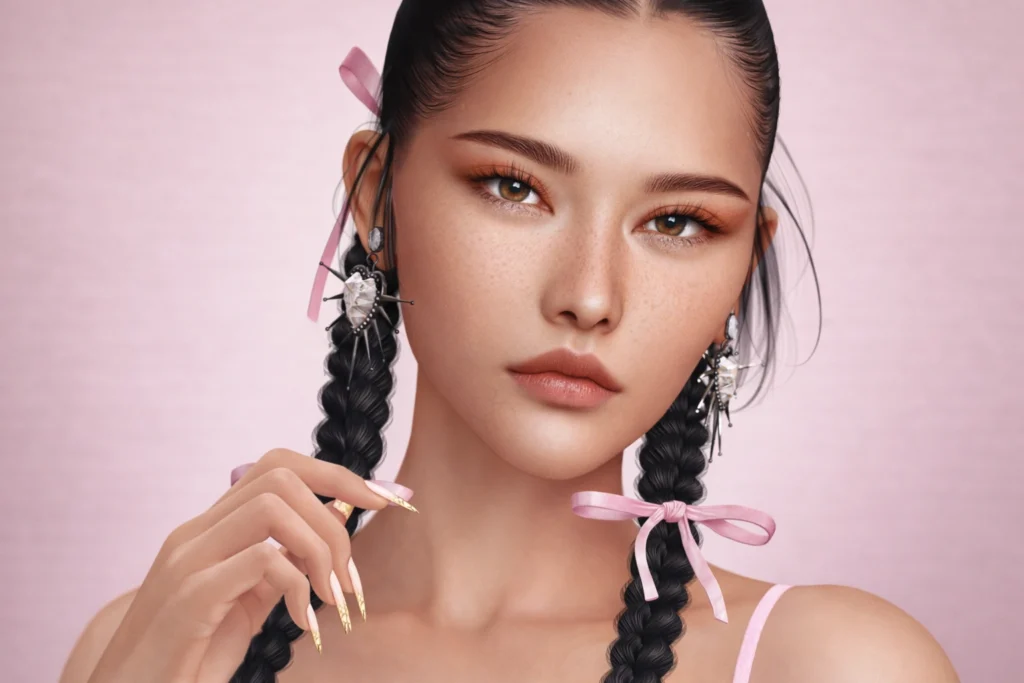
If I had to reduce all of this to one point, it would be that realism in Second Life usually has less to do with finding a single perfect skin than with knowing how to interrupt perfection once you have found a good base.
That interruption can be very slight. A few freckles. A small mole layer. Softer pores. A hint of under-eye depth. Some faint structural detail. It does not have to be dramatic to matter.
In fact, the best results usually are not dramatic.
They just feel a little more lived-in, a little more specific, a little less like the avatar came out of the box fully finished.
And that, at least for me, is usually what makes the difference.
Brands and Resources Referenced in This Article
Taking a Closer Look at the Products Mentioned
All images are original in-world snapshots created by Avatar Studio unless otherwise stated. Avatar Studio is an independent editorial site and is not affiliated with Linden Lab or the featured brands.


[…] The Skin Is Just the Beginning: How BOM Details Make an Avatar Look Real Nothing Changed. And Yet Everything Did. […]